

How Many Pins Should You Post on Pinterest Per Day? A Real Client Case Study
Because sometimes the best Pinterest strategy isn’t doing more—it’s doing what works.
One small change to a client’s Pinterest strategy challenged everything I thought I knew about pinning frequency—and the results surprised us both.
Estimated Read Time: 7 minutes
Hi brilliant woman-owned business owner who knows the potential of Pinterest.
Yes, Pinterest is fun for finding recipes, planning vacations, organizing dream homes, and saving outfit inspiration. But if you’re anything like me, you’re also using Pinterest as a marketing tool to drive traffic to your website, blog posts, products, services, and offers.
At the end of the day, the goal isn’t simply to pin content.
The goal is to get your content in front of the right people.
Think of Pinterest as a visual search engine where you’re connecting solutions with people actively searching for answers.
If you’re newer to Pinterest marketing, you may also enjoy my post on How to Post on Pinterest in 2026, where I walk through the current Pinterest best practices and what is actually working right now.
One of the questions I get asked most often as a Pinterest Marketing Strategist is:
“How many pins should I post on Pinterest per day?”
And honestly, I understand why.
There is so much conflicting advice out there.
Some Pinterest experts recommend posting multiple fresh pins per day. Others suggest pinning even more. Then there are people who swear by less-is-more strategies.
So today, I want to share a real-life Pinterest case study from one of my client accounts.
I’ll walk you through the exact strategy we used, the changes we made, and the surprising Pinterest marketing results that followed.
My hope is that this helps you find the right pinning schedule for your own Pinterest account, whether you’re just getting started or looking to refresh your current Pinterest marketing strategy.
So grab your favorite beverage. Mine is usually a caramel latte, although a glass of pinot noir occasionally wins.
Let’s dive in.

Why There Is So Much Conflicting Pinterest Advice
If you ask ten Pinterest marketers how many pins you should post per day, you’ll probably get ten different answers.
And honestly? I don’t blame you if all the conflicting Pinterest advice feels overwhelming.
Like any platform, Pinterest is constantly evolving. Updates, algorithm shifts, and changes to user behavior can all impact your Pinterest traffic, Pinterest engagement, and overall Pinterest marketing strategy.
I’ve talked more about some of these platform shifts in my post Common Pinterest Questions for Business Owners (Answered by a Pinterest Strategist), because many of the “Pinterest rules” floating around online are often outdated or missing important context.
One thing I do stand by, however, is this:
Pinterest thrives on fresh content.
Pinterest loves fresh, relevant content that provides value to the user. Whether that’s an educational blog post, a helpful guide, a free resource, or a product someone is actively searching for, Pinterest wants to connect people with content that solves a problem.
Think about it from the user’s perspective.
Imagine searching Pinterest for something specific and seeing the exact same pin repeated over and over again down your feed. Not exactly the best experience, right?
Pinterest wants to show users a variety of helpful content, which is why creating fresh pins remains one of the most important Pinterest SEO strategies available.
But here’s where many people get confused:
Fresh content does not automatically mean more content.
And that’s exactly what this case study taught me.
Four Factors That Matter More Than Pin Volume

The Age of Your Pinterest Account
A brand-new Pinterest account will often require a different Pinterest marketing strategy than an established account with years of content and audience data.
How Much Content You Have Available
Someone with 300 blog posts has far more opportunities for fresh content than someone with 20 blog posts.
Your content library matters.
Your Niche and Audience
Different niches behave differently on Pinterest.
What works for a food blogger may not work for a fashion creator, and what works for a driving tips account may not work for a service provider.
Pinterest growth is rarely one-size-fits-all.
Consistency Matters More Than Volume
One fresh pin per day consistently is often more effective than publishing a large batch of content and disappearing for weeks.
Pinterest rewards consistency, relevance, and user experience.
Those factors will almost always outperform random bursts of activity.
The Pinterest Case Study That Changed My Mind
One of my clients is a blogger in a very specific niche: driving tips for teen girls and beginner drivers.
For quite a while, we were publishing five fresh pins per day.
We were following Pinterest best practices, creating quality graphics, using intentional Pinterest keywords, optimizing descriptions, and consistently publishing fresh content.
The account wasn’t performing badly, but early this year I started noticing something.
Metrics were slowly trending downward.
Outbound clicks were declining.
Saves were declining.
Engagement was declining.
And I knew for a fact that the issue wasn’t pin quality.
The content was strong.
The Pinterest SEO strategy was solid.
The keywords were relevant.
So I started asking myself a different question.
Instead of asking, “How can we create more content?”
I started asking, “What if we created less?”
To be completely honest, I expected at least some metrics to dip.
After all, conventional Pinterest marketing advice would suggest that publishing fewer pins means less visibility.
But that’s not what happened.
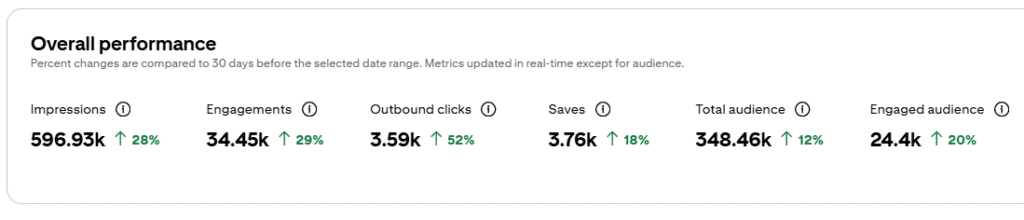
We made the decision to scale back from five fresh pins per day to one fresh pin per day.
And instead of seeing a decline, we saw growth across the board. The metrics didn’t just improve temporarily, either. The account has continued trending upward ever since.
At that moment, one thing became incredibly clear:
Pinterest isn’t one-size-fits-all.
Every Pinterest account is different.
Each niche is different.
Every audience is different.
What works beautifully for one account may not work for another.
And sometimes, the answer isn’t doing more.
Sometimes the answer is doing what works.
Why Posting Fewer Pins Worked

For this particular Pinterest account, it wasn’t about volume.
It was about intentional, consistent pinning.
Every fresh pin we create has a purpose.
Some pins target a specific Pinterest keyword. Others approach the topic from a different angle. Some are designed to solve a problem. Others are highly saveable and encourage users to come back later, such as quick tips, checklists, or step-by-step guides.
We aren’t creating content simply to hit a certain number of pins per day.
We’re creating content that serves the audience.
When we shifted from five fresh pins per day to one fresh pin per day, it allowed us to focus even more on creating thoughtful, strategic content rather than chasing volume for the sake of volume.
The result?
Higher engagement, more saves, more outbound clicks, and continued growth.
That’s why I always tell my clients that Pinterest marketing isn’t about finding a magic number.
It’s about finding the right strategy for your account.
So How Many Pins Should You Post Per Day On Pinterest?
If you’ve made it this far hoping for an exact number, I promise I’m not trying to avoid the question.
My recommendation for most bloggers, content creators, and small business owners is simple:
Start with 1-3 fresh pins per day.
Not because Pinterest requires it.
Not because that’s the secret formula.
But because it’s realistic, sustainable, and gives you enough data to learn what your audience responds to.
One of the biggest mistakes I see people make is trying to do too much too quickly.
They commit to publishing five, ten, or even more fresh pins every day, only to burn out a few weeks later.
Pinterest rewards consistency far more than short bursts of activity.
A sustainable Pinterest marketing strategy will always outperform an overwhelming one.
As your Pinterest account grows, pay attention to your analytics.
Look for patterns.
Which pins are driving the most Pinterest traffic?
What topics are generating the most saves?
Which designs are getting the most engagement?
The answers are already sitting inside your analytics.
In fact, monitoring Pinterest analytics and adjusting your strategy based on real data is one of the biggest reasons Pinterest continues to be one of my favorite long-term marketing platforms. I share more about that process in How I Use Pinterest To Drive Consistent Traffic To My Blog.
Let your data guide your decisions.
Over time, you’ll naturally discover certain pins that continue bringing traffic, saves, and clicks long after they’ve been published.
These are often your strongest performers and can continue working for you months or even years later.
The goal isn’t simply to create more pins.
The goal is to create better pins.
Pins that solve problems.
Are we answering questions through our pins?
Pins that connect your ideal audience with the content they’re already searching for.
That’s where long-term Pinterest growth happens.
What This Means For Your Pinterest Strategy
If there’s one thing I hope you take away from this Pinterest case study, it’s this:
More pins, more platforms, and more content don’t automatically lead to better results.
Sometimes the biggest growth happens when you stop asking yourself, “How can I do more?”
And start asking, “What’s actually working?”
For one of my clients, reducing our pinning volume led to some of the strongest Pinterest marketing results we’ve seen all year.
Will that be true for every account?
Probably not.
But that’s exactly the point.
Pinterest isn’t one-size-fits-all.
The best Pinterest strategy is the one that’s built around your content, your audience, your goals, and your data.
Frequently Asked Questions About Pinterest Pinning
How many pins should I post on Pinterest per day? My recommendation for most bloggers and small business owners is to start with 1-3 fresh pins per day. This gives Pinterest enough fresh content to index while allowing you to stay consistent without burning out. As your account grows, your analytics will help determine whether increasing or decreasing your pinning frequency makes sense.
Is it better to pin more or less on Pinterest? It depends on your account, niche, and content library. While Pinterest does value fresh content, more pins don’t automatically equal better results. In one of my client accounts, reducing our publishing schedule from five fresh pins per day to one fresh pin per day actually resulted in increased traffic, saves, and engagement. The key is testing and following the data.
Does Pinterest prefer fresh pins? Yes. Pinterest continues to prioritize fresh content because it creates a better experience for users. Fresh pins give Pinterest new content to distribute and test with audiences. However, fresh content should always be relevant, helpful, and intentional rather than created simply to increase volume.
Can I grow on Pinterest with one pin per day? Absolutely. Many Pinterest accounts can see strong growth with one fresh pin per day when that content is optimized with strong Pinterest keywords, clear visuals, and valuable destinations. Consistency and quality often outperform high-volume pinning strategies.
How long does it take Pinterest to drive traffic? Pinterest is a long-term marketing platform, not an overnight traffic source. Most accounts begin seeing meaningful traction within 3-6 months, while newer accounts may take 6-12 months to build momentum. Consistent pinning, Pinterest SEO, and patience are key.
If you’re just getting started, or your Pinterest account could use a little TLC, I’d love to help.
Download my free Pinterest Quick Start Kit and learn how to optimize your Pinterest account in an hour or less so you can start attracting your ideal audience and build a strong foundation for long-term Pinterest success.
Happy Pinning Friend!


Be the first to comment