

Pinterest vs Instagram: Which Platform Is Better for Traffic, Leads, and Business Growth?
One platform helps people find you. The other helps people get to know you. Here’s why understanding the difference can completely change your marketing strategy.
Estimated Read Time: 8-10 Minutes
Hello Pinning friend, if you’ve spent any time around my corner of the internet, you’ve probably heard me talk about Pinterest quite a bit. And while I may be slightly biased as a Pinterest Strategist, I’m going to start this post with a statement that might surprise some people:
I think Pinterest is better than Instagram.
Now before anyone starts typing an angry comment, let me explain.
I use both platforms in my business, and I genuinely believe they can work beautifully together. The problem is that many business owners approach them as if they’re designed to accomplish the same goal. In reality, Pinterest and Instagram serve completely different purposes, and understanding that distinction can completely change the way you market your business online.
When I open Instagram, I’m usually catching up with people. I’m watching stories, checking in on other business owners, seeing behind-the-scenes moments, and engaging with content that’s happening right now. It’s a platform built around connection and community.
Pinterest feels completely different.
Most of the time, I’m not opening Pinterest to scroll aimlessly. I’m looking for something specific. Maybe I’m planning a trip and need itinerary ideas. Perhaps I’m searching for a recipe to make for dinner. Maybe I’m looking for outfit inspiration, home decor ideas, or trying to solve a business problem.
That’s because Pinterest functions much more like a search engine than a social media platform.
People aren’t simply consuming content on Pinterest. They’re actively searching for ideas, inspiration, products, recommendations, and solutions. They’re planning purchases, researching options, and saving content for future decisions.
And from a marketing perspective, that’s where Pinterest becomes incredibly powerful.
Pinterest vs Instagram: Understanding the Biggest Difference
At first glance, Pinterest and Instagram can seem surprisingly similar. Both platforms are highly visual, they allow users to discover new brands, products, and creators. Both can be valuable marketing tools.
But the user behavior behind each platform is dramatically different.
Instagram is built around relationships and community. The platform encourages engagement through likes, comments, shares, stories, and direct messages. People often discover content through accounts they already follow, recommendations based on their interests, and content that’s currently trending.
Pinterest operates differently.
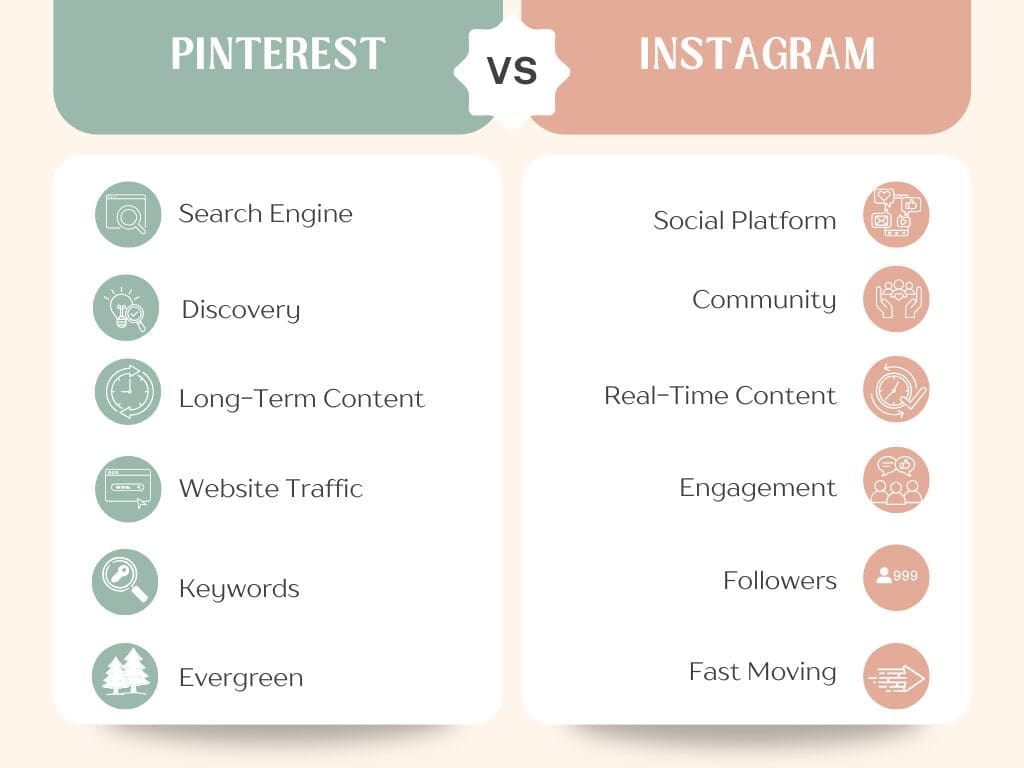
Rather than focusing on who you know or follow, Pinterest focuses on what you’re searching for. Users arrive with intent. They type keywords into the search bar because they’re looking for something specific, whether that’s a recipe, a wedding venue, a summer outfit, a home renovation idea, or tips for growing a business.
That’s why I often describe Pinterest as Google with visuals.
Instead of relying heavily on followers, Pinterest relies on search. Content is surfaced based on relevance, keywords, and user intent, giving creators and business owners an opportunity to reach people who may have never heard of them before.
Pinterest: A Visual Search Engine Designed for Discovery
Pinterest works much more like a search engine than a social media platform.
People actively search for ideas, inspiration, education, products, and solutions to problems. They use Pinterest to plan purchases, save future projects, research options, and gather information before making decisions.
This search-first behavior is one of the reasons Pinterest can be such a powerful marketing tool.
A few of Pinterest’s biggest strengths include:
Visual Search Engine
Pinterest relies heavily on keywords and search intent, making Pinterest SEO incredibly important. Content is discovered because it’s relevant to what users are searching for, not simply because someone follows your account.
Sustainable Marketing
Unlike most social media platforms, Pinterest content has an incredibly long lifespan. A well-optimized pin can continue generating traffic, clicks, and engagement months or even years after it’s been published.
Long-Term Discoverability
Pinterest content continues to appear in search results long after publication. Rather than constantly chasing visibility, you’re building a library of content that can continue working behind the scenes.
For business owners looking for long-term website traffic, that’s a huge advantage.
Instagram: A Platform Built Around Connection
Instagram serves a completely different purpose.
While Pinterest focuses on discovery, Instagram focuses on connection.
The platform is designed to help people engage with creators, brands, and communities in real time. Stories, reels, comments, direct messages, and shares all encourage interaction and relationship building.
Instagram excels at helping people connect with the human side of your business.
Whether you’re sharing behind-the-scenes moments, celebrating a launch, telling your story, or showing your personality, Instagram creates opportunities for your audience to get to know you on a deeper level.
Some of Instagram’s biggest strengths include:
Community Building
Instagram makes it easy to engage directly with your audience and build relationships over time.
Stories and Reels
Stories provide real-time updates, while reels offer an opportunity to increase visibility through short-form video content.
Brand Connection
Instagram allows people to connect with the person behind the brand, creating trust and familiarity that can be difficult to replicate elsewhere.

Content Formats and Marketing Strategy: Pinterest vs Instagram
One of the easiest ways to understand the difference between Pinterest and Instagram is by looking at the type of content that performs well on each platform.
Pinterest thrives on content that solves problems, answers questions, provides education, or helps users make decisions.
Some examples include:
- Blog posts
- Tutorials
- Checklists
- How-to guides
- Product roundups
- Seasonal content
- Educational content
- Evergreen content
Pinterest users are actively searching for solutions, which is why problem-solution content tends to perform so well.
Instagram content tends to be more personal and community-focused.
Some examples include:
- Reels
- Stories
- Behind-the-scenes content
- Day-in-the-life content
- Product launches
- Personal stories
- Community conversations
- Brand storytelling
Instagram rewards engagement and interaction, making it a fantastic platform for building relationships with your audience.
Put simply:
Pinterest thrives on searchable, educational, and problem-solving content.
Instagram thrives on storytelling, connection, and community.
Pinterest SEO vs Instagram Followers
One of the biggest reasons I love Pinterest is that follower count matters far less than many people think.
Because Pinterest functions as a search engine, content is discovered through keywords, search intent, and relevance. Someone can find your content without ever following you.
In fact, many of the people visiting your website from Pinterest may have never heard of you before.
Instagram works differently.
While Instagram has certainly improved content discovery over the years, follower count, engagement, and audience relationships still play a much larger role in determining visibility.
This is one of the reasons Pinterest can be such an effective platform for growing brand awareness and reaching entirely new audiences.
Pinterest and Instagram Algorithms: Discoverability and Organic Reach
The algorithms behind Pinterest and Instagram are also very different.
Pinterest rewards:
- Relevant keywords
- Search intent
- Fresh content
- Saves
- Clicks
- User engagement
Because content is searchable, pins can continue surfacing long after they’re published.
Instagram focuses more heavily on:
- Engagement
- Watch time
- Shares
- Comments
- Relationships
- Recent activity
As a result, Instagram content often has a much shorter lifespan.
A Pinterest pin can continue generating traffic for months or years.
An Instagram post often receives the majority of its engagement within the first day or two after publication.
This is one of the reasons Pinterest has such a strong advantage when it comes to organic reach and long-term discoverability.
One of the things I love most about Pinterest is that there isn’t one perfect formula for success. In fact, I recently shared a real client case study where reducing a client’s publishing schedule from five fresh pins per day to one fresh pin per day actually improved results. If you’re wondering how often you should be pinning, you can read more about that in How Many Pins Should You Post on Pinterest Per Day? A Real Client Case Study.
Pinterest Traffic, Lead Generation, and Email List Growth
This is where Pinterest really shines.
Pinterest users aren’t just scrolling, they’re searching, researching, planning, and very often ready to take action!
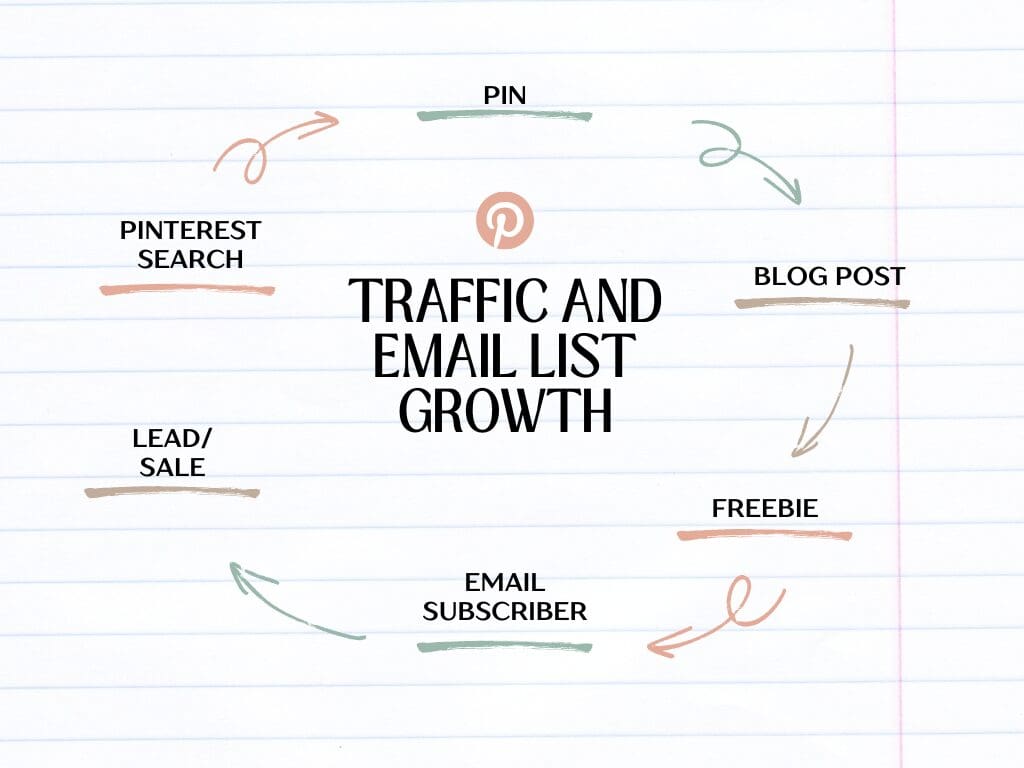
Because Pinterest naturally encourages users to leave the platform and visit websites, it can become a powerful source of traffic for bloggers, content creators, service providers, and businesses selling products.
But traffic is only part of the equation.
One of my favorite things about Pinterest is its ability to help grow an email list.
A well-optimized pin can lead someone to a blog post, free resource, lead magnet, webinar, product page, or service page. From there, that visitor can join your email list and enter your marketing ecosystem.
If you’d like to learn more about that process, be sure to read my post, Turn Pinterest Traffic Into Subscribers, Leads, and Sales.
Because while traffic is wonderful, subscribers, leads, and customers are what ultimately help grow a business.
So Which Platform Is Better?
The honest answer?
It depends on your goals.
If your primary goal is building community, nurturing relationships, and connecting with your audience in real time, Instagram is incredibly valuable.
If your primary goal is website traffic, discoverability, lead generation, and sustainable marketing, Pinterest has a clear advantage.
Personally, I don’t think this is an either-or decision.
I use both.
Pinterest helps people find me.
Instagram helps people get to know me.
And together, they create a marketing strategy that supports both visibility and connection.
But if we’re talking strictly about long-term traffic, discoverability, and sustainable growth?
Pinterest wins every time.
Ready to Make Pinterest Work for Your Business?
If you’ve made it this far, chances are you’re starting to see why I’m such a big fan of Pinterest.

Maybe you’ve realized your content could be working harder for you. Maybe you’re tired of constantly creating content that disappears after a day or two. Or maybe you’ve been curious about Pinterest but aren’t quite sure where to start.
The good news?
You don’t have to figure it all out on your own.
Pinterest Management
If you’d rather hand off your Pinterest strategy entirely and focus on your zone of genius, my monthly Pinterest Management services are designed to do exactly that.
I take care of the strategy, keyword research, pin creation, optimization, and scheduling so your content can continue working behind the scenes while you focus on serving your clients, creating content, running your business, or simply getting some of your time back.
Pinterest Account Optimization
Already have a Pinterest account but feel like it’s not working as hard as it could be?
My Pinterest Account Optimization service is a one-time deep dive designed to create a strong foundation for long-term growth. Together, we’ll transform your account into a strategic marketing tool with optimized boards, keyword-rich descriptions, branded pin templates, and a custom Pinterest strategy built around your business goals.
Whether you’re starting from scratch or refreshing an existing account, you’ll walk away with a fully optimized account that’s designed to attract the right audience and support sustainable growth.
Pinterest Audit + Action Plan
If you’re more of a DIY business owner, my Pinterest Audit + Action Plan gives you a clear roadmap for improving your account.
I’ll analyze your profile, boards, pin designs, content strategy, and overall account setup, then provide personalized recommendations and a step-by-step action plan so you know exactly what to focus on next.
You’ll leave with clarity, direction, and the confidence to move forward with a Pinterest strategy that’s tailored to your business.
Ready to Get Started?
If you’re ready to put Pinterest to work for your business, I’d love to learn more about what you’re building.
The best place to start is by filling out my inquiry questionnaire. This gives me a chance to learn more about your business, your goals, what you’ve already tried, and what kind of support you’re looking for before we schedule a call.
Whether you’re looking for full Pinterest management, a complete account optimization, or a DIY action plan, I’d be honored to help you create a Pinterest strategy that supports your long-term business goals.
👉 Fill out the inquiry questionnaire here!
Frequently Asked Questions About Pinterest vs Instagram
Is Pinterest better than Instagram for business? It depends on your goals. Instagram excels at building relationships and community, while Pinterest excels at driving website traffic, generating leads, and increasing long-term discoverability. Both platforms can be powerful, but they serve different purposes.
Does Pinterest still work in 2026? Absolutely. Pinterest continues to be one of the strongest platforms for driving organic traffic because users actively search for ideas, products, inspiration, and solutions. Unlike many social media platforms, Pinterest content can continue generating results long after it’s published.
Can Pinterest help me grow my email list? Yes! One of my favorite things about Pinterest is that it can drive highly targeted traffic to blog posts, lead magnets, free resources, and landing pages. When paired with a strong email marketing strategy, Pinterest can become a powerful source of new subscribers.
Do I need a blog to be successful on Pinterest? No, but having a website gives Pinterest more opportunities to drive traffic to your business. Pinterest works well for bloggers, service providers, e-commerce businesses, digital product creators, and many other business models.
How long does it take to see results on Pinterest? Pinterest is a long-term marketing platform. While some accounts see traction sooner, most businesses should expect to spend several months building momentum. The good news is that Pinterest content often continues working long after it’s published, making it one of the most sustainable marketing platforms available.
How many Pins should I post per day? There’s no one-size-fits-all answer. In fact, I recently shared a real client case study showing how reducing pin volume actually improved results. For most business owners, I recommend starting with 1-3 fresh Pins per day and adjusting based on your analytics and goals.


Be the first to comment